By Role
-
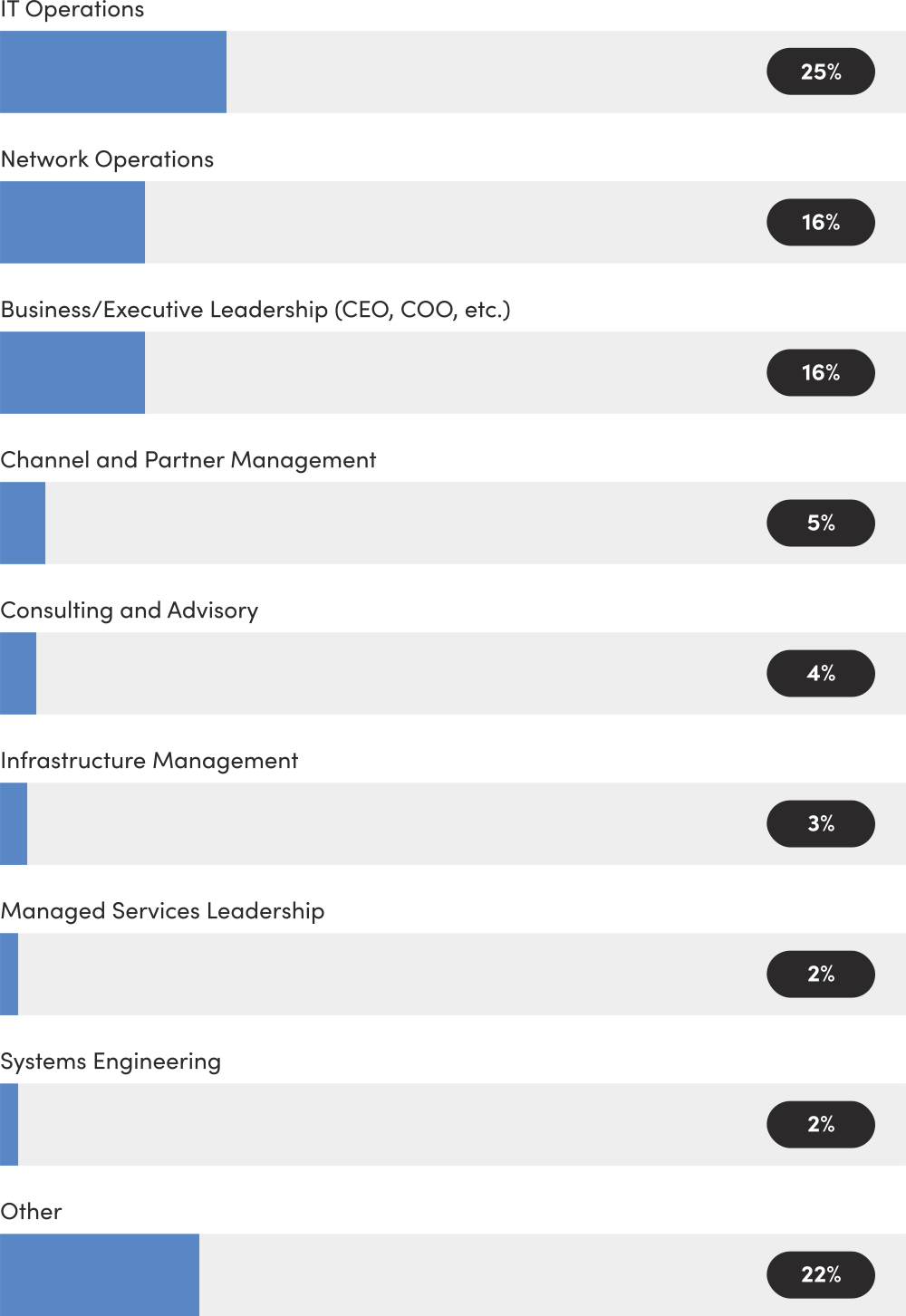
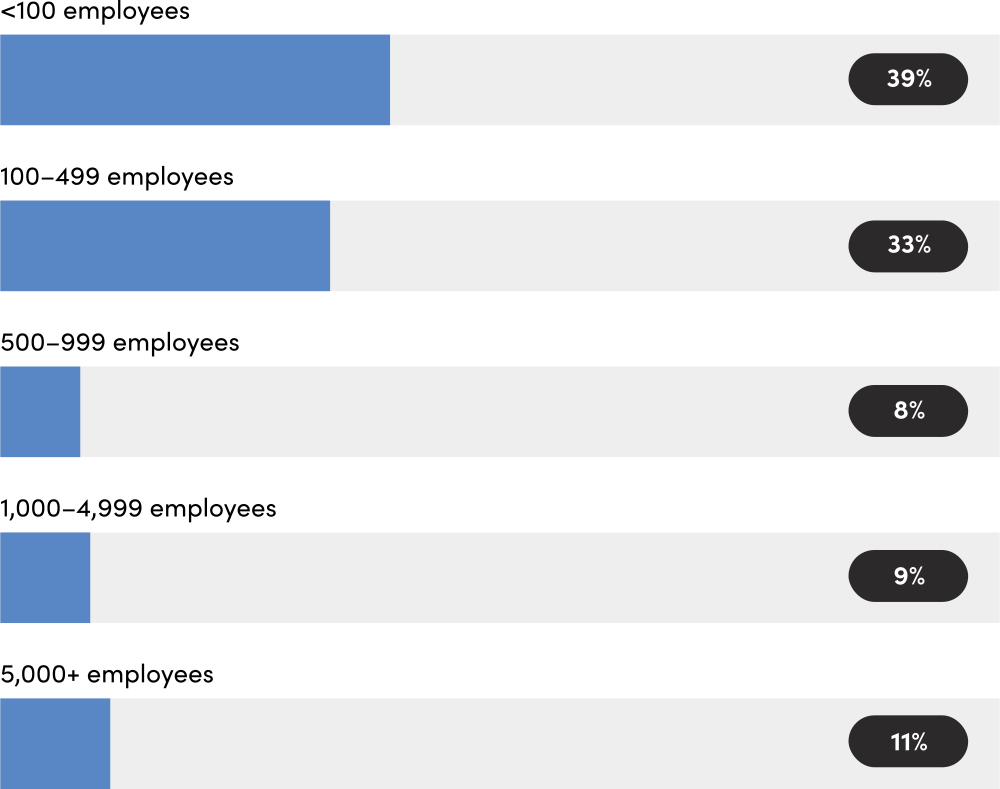
41% work in IT/Network Operations roles
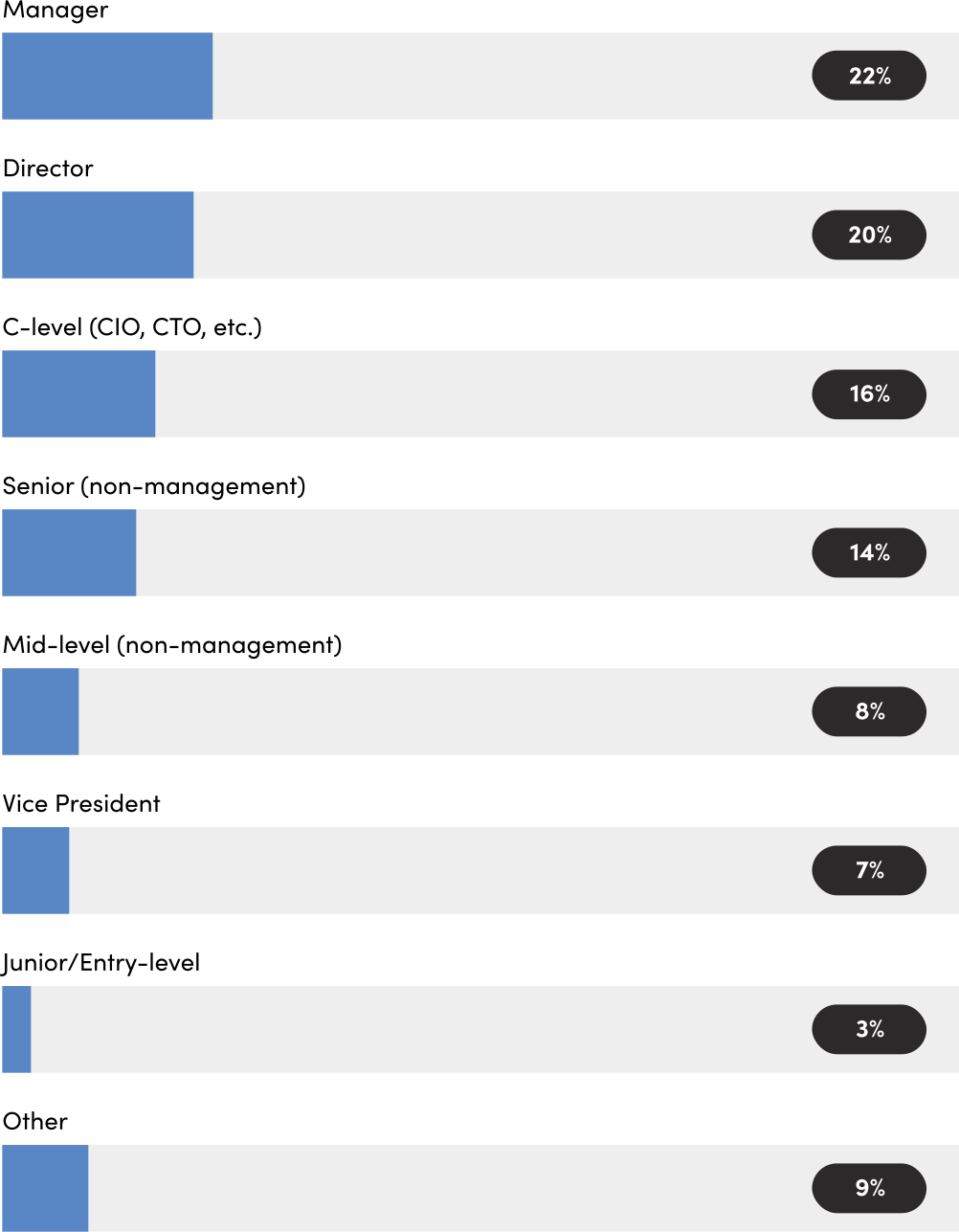
- 65% are manager level or above
A survey of 150+ IT and network operations professionals on operational maturity, AI adoption, outsourcing trends, and investment priorities for 2025 and beyond.



We asked respondents to self-assess their organization's capabilities across five core operational areas.
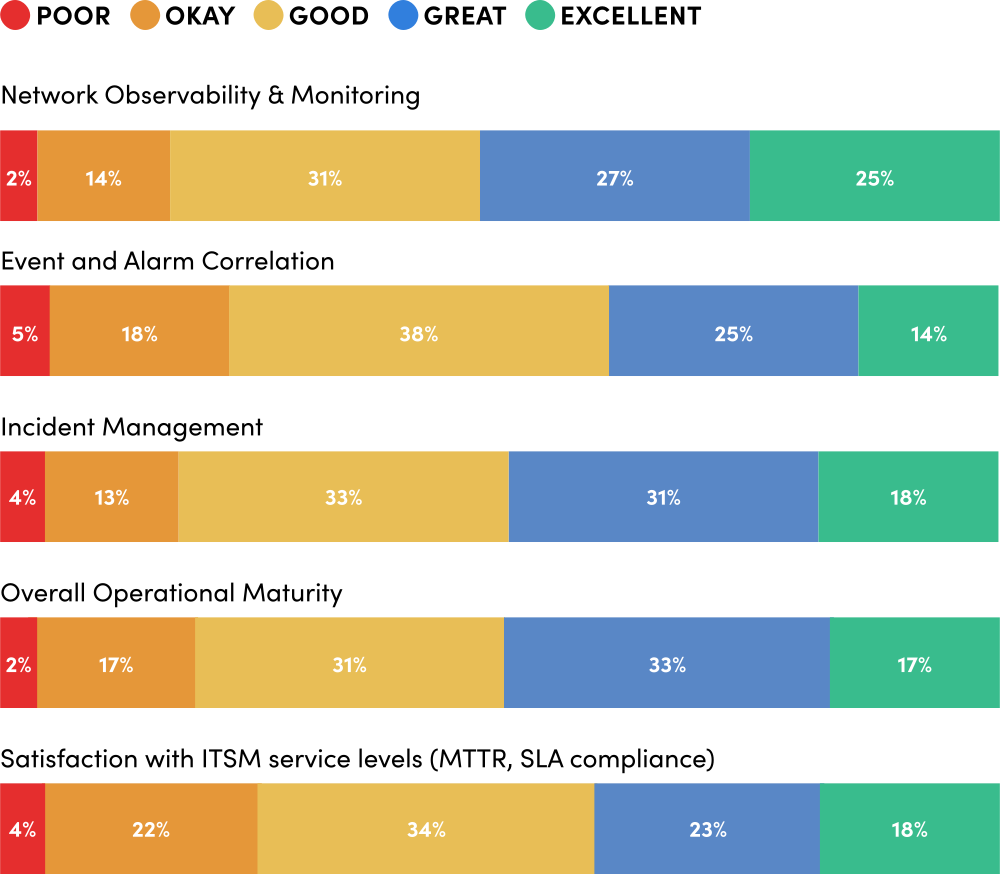

"The 'good enough' we see here is often what we hear from teams that provide services for the internal group. Where, if the experience isn't that great, it's okay, it's good enough. We just need to get by. On the service provider side, when the way they perform the service impacts the client, that's where they care a little bit more."
— Martin Dewald
Solutions Manager, Xerox IT Solutions

"When I talk to SMB owners and small companies, they're very practical. They want to know how technology makes them more widgets that work and have impact in the business. If they don't see a very practical way to use it, be it traditional tools or AI tools, there's no point in me talking to them about AI at all, unless I could tell them exactly what it's going to do for them."
— Greg DePratt
Solution Architect II, Xerox IT Solutions
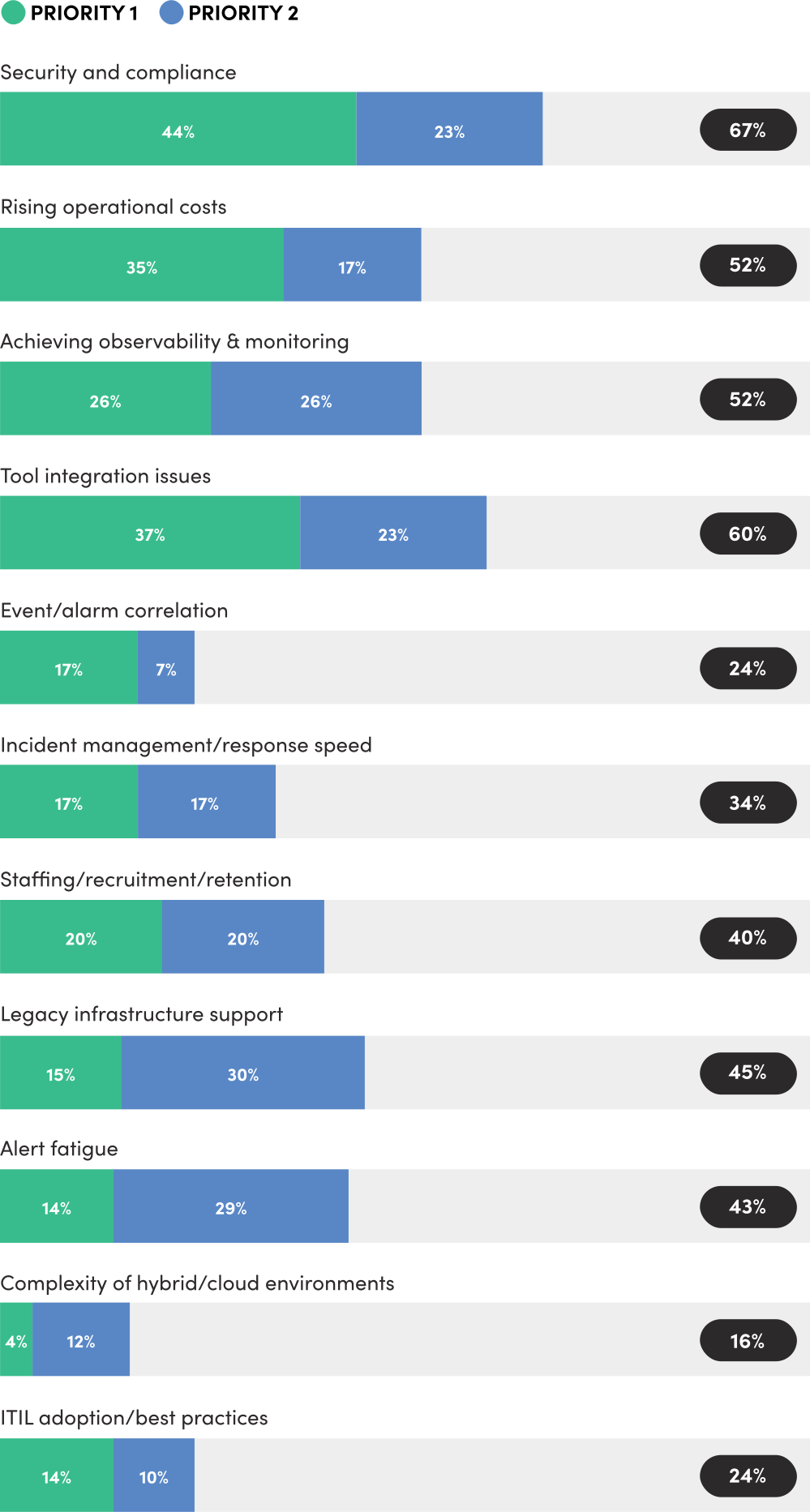
We asked respondents to rank their most pressing current operational challenges. Security and compliance topped the list, followed by rising operational costs and observability gaps.
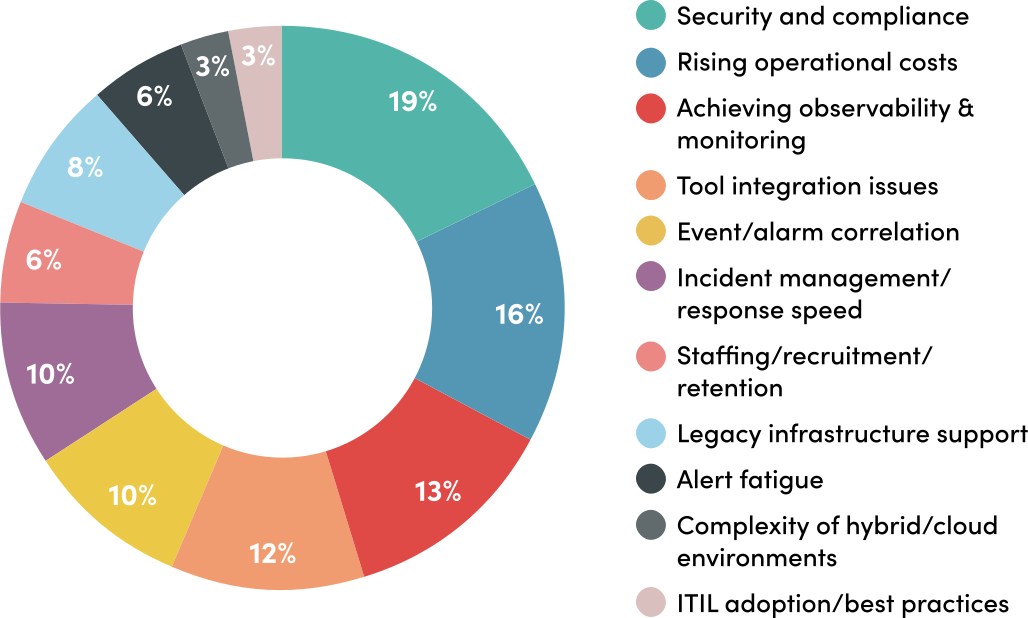
Looking ahead, respondents identified AI adoption and security threats as tied for their top concerns.
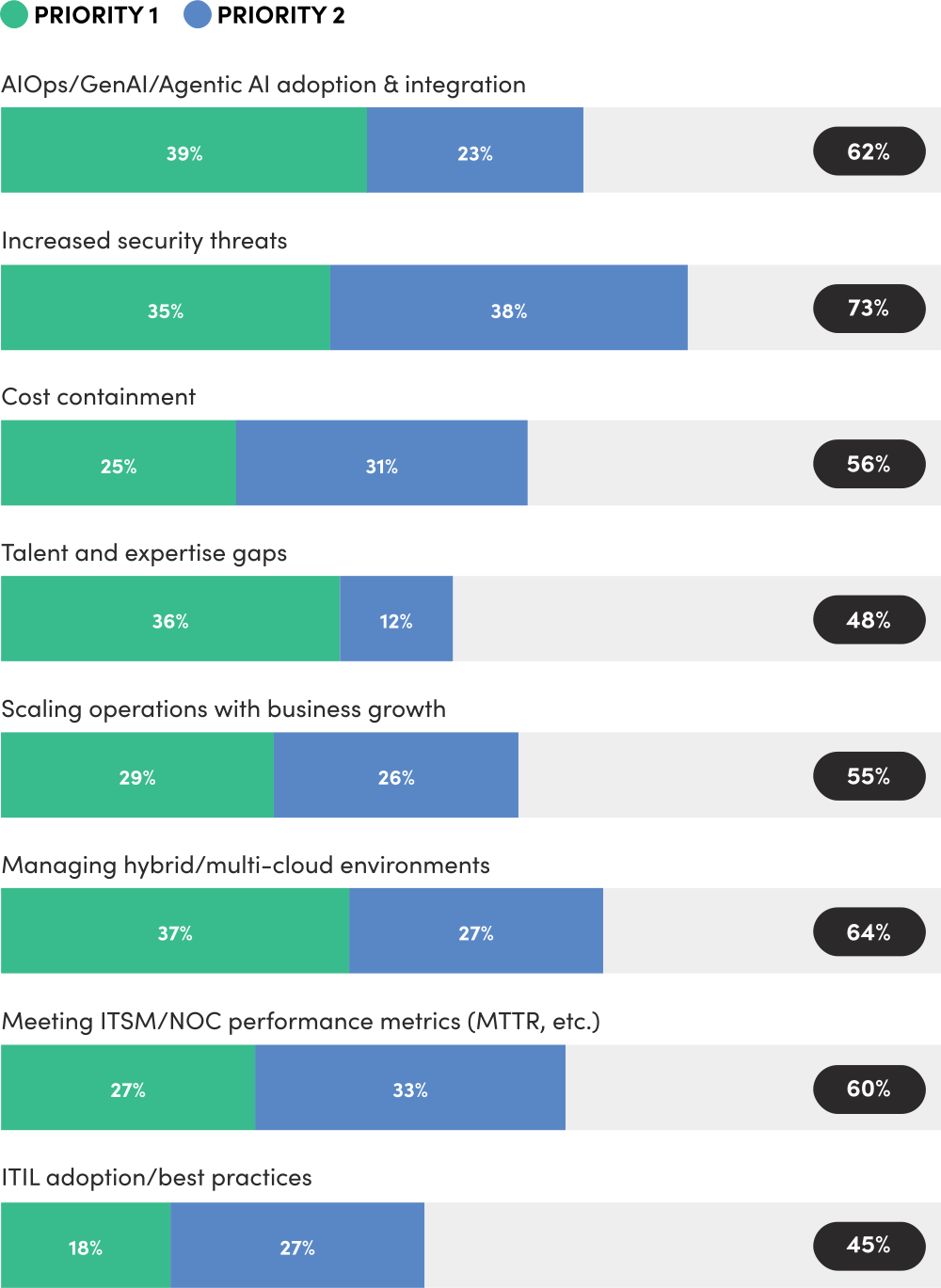
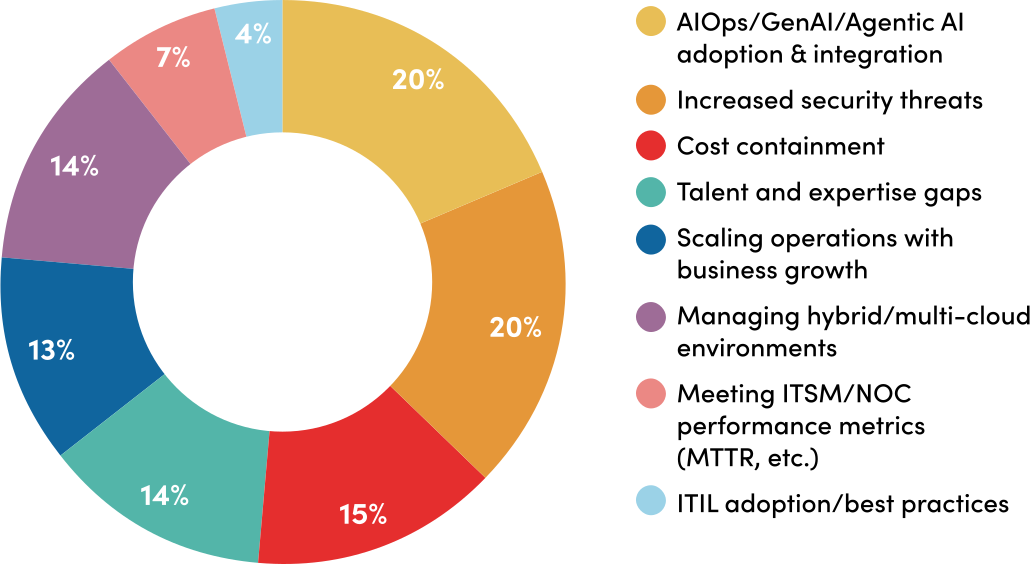
AI was central to this survey both as a capability organizations are building and a challenge they're navigating. Nearly half of respondents report some level of AI integration, though most remain in early stages.
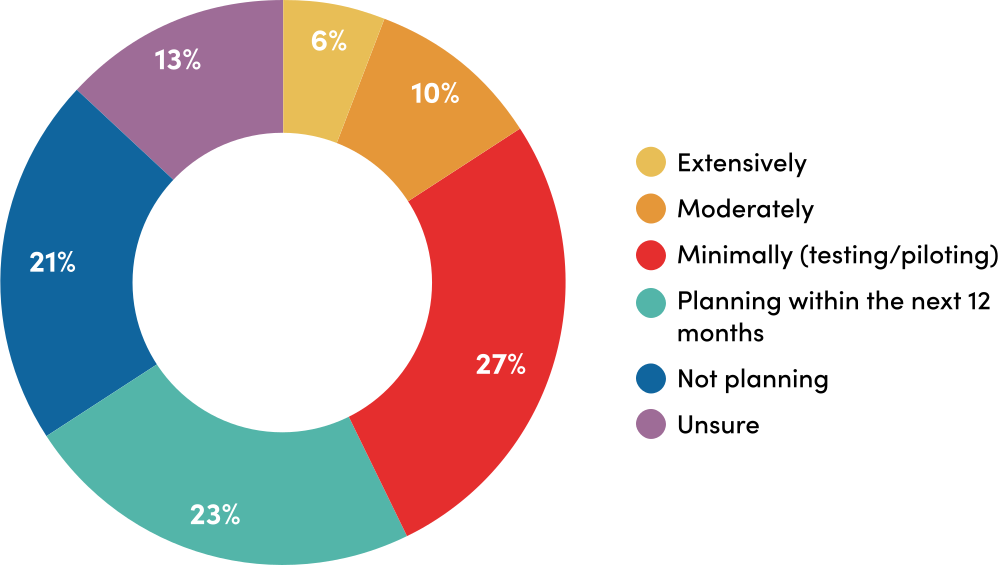
43% are currently integrating AI to some degree (extensively + moderately + minimally). But the depth of that integration varies significantly. Only 6% describe their adoption as "extensive."
AI tied for the #1 anticipated challenge over the next 12–24 months. Yet 21% of respondents aren't planning to adopt AI, and another 13% remain unsure.
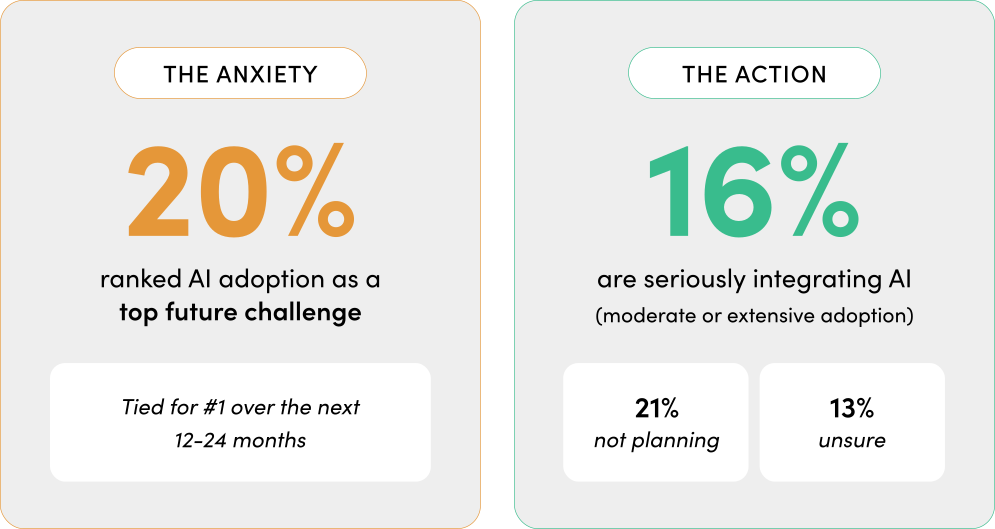
This gap suggests that for many organizations, AI remains a looming priority rather than an active initiative.

"If we go AI-heavy on the things we do, some teams get a little nervous. Everybody recognizes that it's here, but I think a lot of people are nervous that fully trusting it would cause some bigger issues. They don't want to lose that human touch, the human critical thinking, the human eyes on things."
— Martin Dewald
Solutions Manager, Xerox IT Solutions
"The teams I work with typically have a lower operational maturity level. They have technical debt. They have foundational challenges they need to solve before they can even start to think about AI, like old servers and things like that. Maybe they've migrated to the cloud and it's costing them too much and they want to go back. They're a step or or two behind the AI wave. And frankly, a lot of the time, they don't have things in order well enough to even think about it quite yet."
— Greg DePratt
Solution Architect II, Xerox IT Solutions
"You see this with the generational change. Some of the clients where we jump into calls, and it's super young engineers, they want it all. They're like, 'Oh, you're actually still using people for xyz?' And then you have other teams that have been in this industry for a long time. They view it more like it's good to have it as an assistant on your side, but it shouldn't replace the human doing the work yet. It is definitely a balance of both worlds with pros and cons in each that needs to be kept in mind when thinking of the AI use cases."
— Martin Dewald
Solutions Manager, Xerox IT Solutions
Among those adopting AI, incident detection and classification leads as the primary use case.
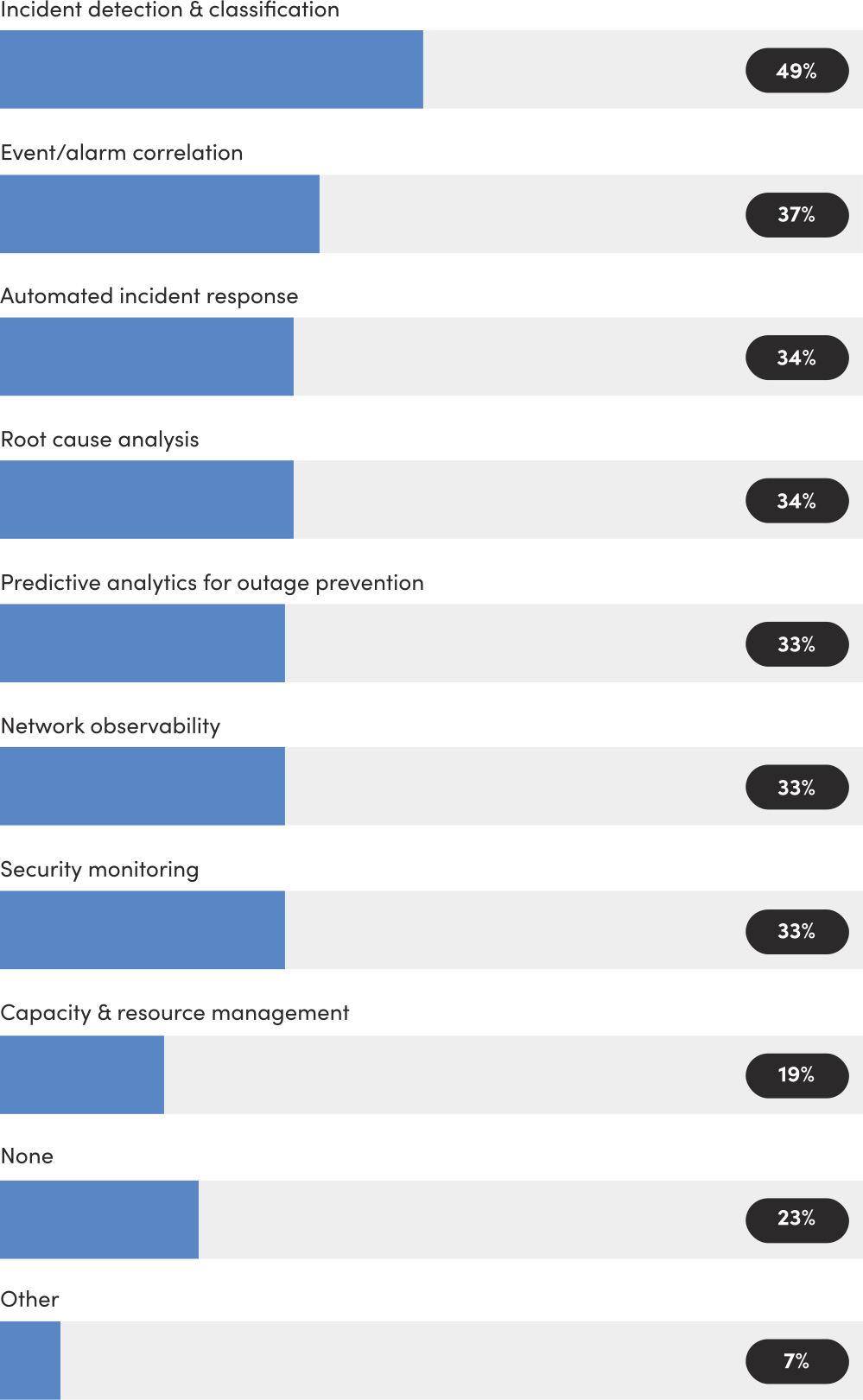
Incident detection leads by a wide margin. Capacity and resource management trails significantly, maybe indicating that AI isn't yet trusted for resource allocation decisions, or that the tools simply aren't mature enough.
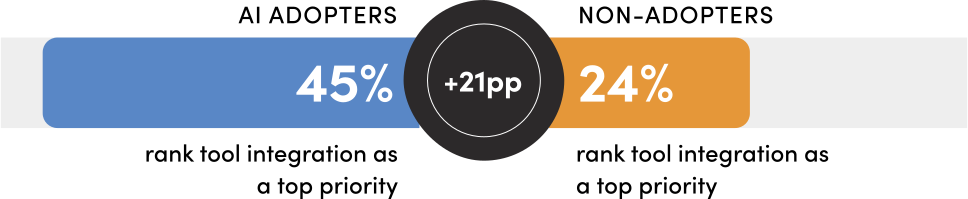
AI adopters are 21 percentage points more likely to rank tool/platform integration as a top challenge. One might assume that organizations adopting AI are further along the maturity curve and have their tooling sorted out.
The data suggests the opposite: AI adoption appears to create integration headaches rather than solve them.

"AI becomes more useful when you've got access to more information. I want to understand why things are going bad. Well, if I've got access to more data, AI will derive what’s really happening. So it doesn't surprise me in the least that AI adopters are more concerned about integration."
— Jim Martin
Xerox IT Solutions
AI adopters are 27 percentage points less likely to rank rising operational costs as a top priority.
Is AI already delivering ROI that offsets cost concerns? Or does this reflect the profile of organizations that adopt A (those with budget flexibility to begin with)?

"The fact that they've already gone there—that doesn't surprise me, because they're clearly willing to invest to get the greater outcome. This doesn't mean that they don't care about spending, but they understand that there's an investment to get a return."
— Jim Martin
VP of Technology, Managed Services, Xerox IT Solutions

"We had a recent example of a couple of companies that wanted to buy services from us, and since newer LLM models were released, they kind of went back and said, 'Look, all of this stuff you guys are doing, I can simplify those services by leveraging AI.' So they're going and building platforms that allow them to reduce their operational costs significantly."
— Prasad Rao
SVP of Managed Services, Xerox IT Solutions
"The pushback I hear from a lot of small IT orgs is that they're kind of afraid of being replaced. So they don't really invest in tools, because they think they're the value-add to solve the problem, and they don't want to be replaced by AI either. So they try to keep themselves as the person doing the solving and give themselves value versus investing in tools."
— Greg DePratt
Solution Architect II, Xerox IT Solutions
Organizations that rate their incident management capabilities lower are less likely to invest in incident management tools, not more. The regression showed a 17.5 percentage point decrease in the likelihood of investing in incident management platforms for every point lower organizations rate themselves on incident management capability.
Meanwhile, organizations with higher operational maturity are 24 percentage points more likely to invest in incident management platforms.
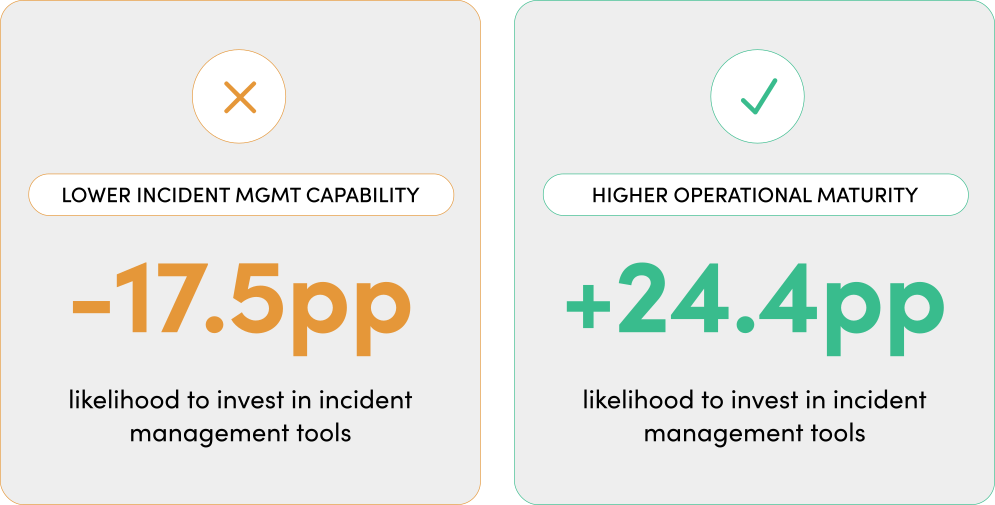
The implication is a little uncomfortable: the organizations that need help most may not be seeking it. Mature organizations invest to stay ahead; struggling organizations stay stuck.
"One of the things we run into a lot is when we talk to these companies, they have their own internal pool of engineers that see the issues and fix them on the fly, so they're not necessarily structured. I think there's a little bit of hesitancy—feeling that if we put them in a structured workflow, it would only slow them down rather than just knocking out and resolving the issue."
— Martin Dewald
Solutions Manager, Xerox IT Solutions
"It takes a certain level of understanding of the infrastructure and of the impact of the infrastructure to be able to say, 'Hey, I need to invest in my tooling to support this.' If you haven't had a lot of problems, a lot of organizations just don't prioritize that. If you're not great at it, you probably aren't going to be investing in tools. It takes that unique scenario of saying, 'Hey, we're really weak at it, but we think it's important, and so we're going to invest.' Well, if you thought it was important, you already would have probably invested.
This all flips around as soon as you get a major outage or something like that, where you realize that had you had it, that would address it."
— Jim Martin
VP of Technology, Managed Services, Xerox IT Solutions

"We get a decent number of calls when something major happened in the organization—a major outage—and then it's now high on the radar of the C-levels, and they're wondering, 'We don't have a process, we don't have a NOC, we don't have good systems in place for monitoring and to catch these issues and resolve them quickly.' That does happen."
— Prasad Ravi
Former VP of Product Management, Xerox IT Solutions
"A lot of organizations sort of run on the 'Well, if there's a problem, somebody will scream at me and I'll go deal with it.' So they're very much in a pure break-fix kind of mode. You've only got a certain amount of bandwidth for individuals to work on things, a certain amount of budget to work on things, and if things aren't actively blowing up for people, they're not investing in it."
— Greg DePratt
Solution Architect II, Xerox IT Solutions
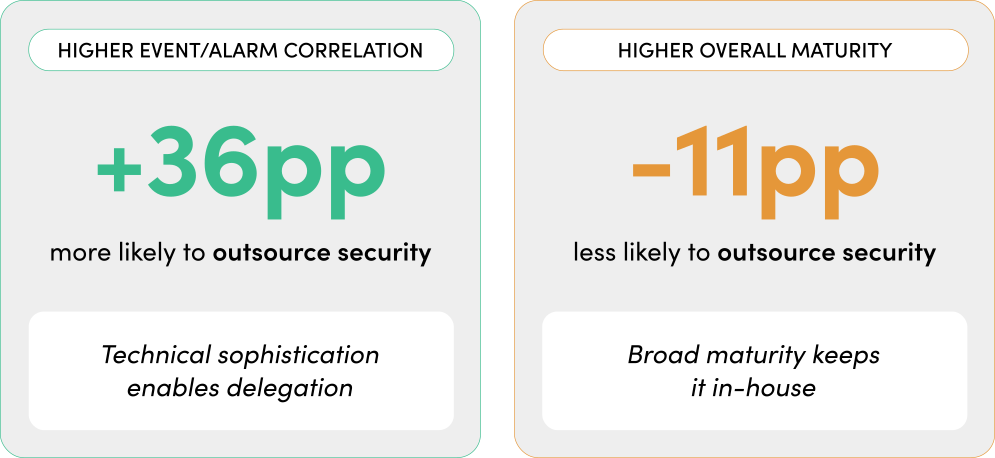
Organizations with stronger event/alarm correlation capabilities are 36 percentage points more likely to outsource security operations.
You might expect internal strength to reduce outsourcing needs. Instead, it appears that technical sophistication helps organizations recognize where external expertise adds value.
However: Higher overall operational maturity has the opposite effect—making organizations 11 percentage points less likely to outsource security.
"When a team is running a very sophisticated operation, they can clearly draw a line around what they want somebody else to do. 'I've broken my process into these blocks, I can have this process handled by an outsourced organization, and I understand exactly what the inputs and outputs are very clearly.' That's an ideal scenario for outsourcing, because it reduces your costs."
— Prasad Ravi
Former VP of Product Management, Xerox IT Solutions
"If you are growing and you say, 'Hey, we're getting really good at this, but we know that we're not good at this other thing, let's outsource that.' I think that's a reasonable conclusion. But as you're trying to bring your overall operational maturity up, you may bring it in house."
— Jim Martin
VP of Technology, Managed Services, Xerox IT Solutions
We asked where organizations planned to invest over the next 12 months.
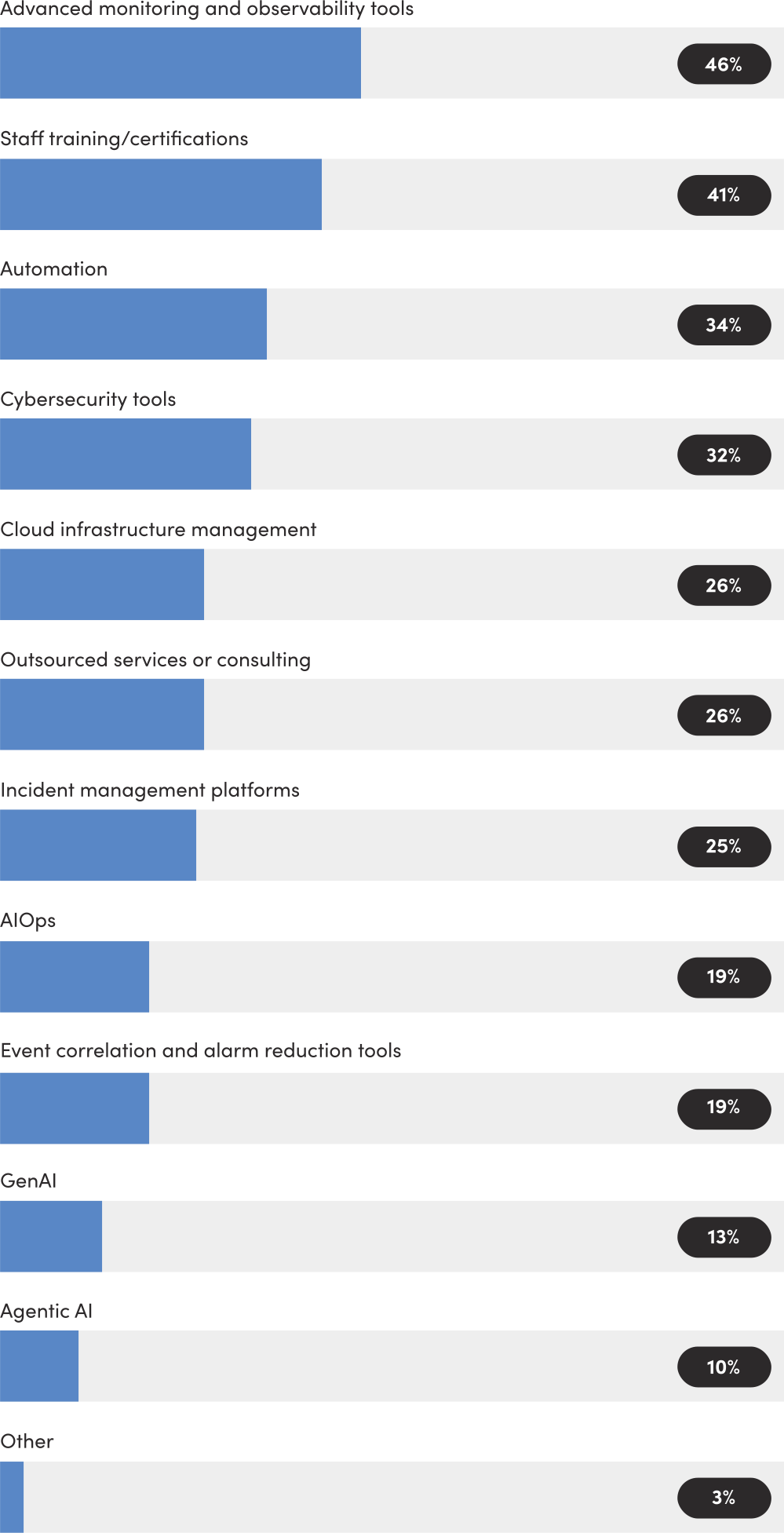
Organizations are investing in both technology and people. Monitoring tools and staff training top the list, while specific AI investments (AIOps, GenAI, Agentic AI) remain lower priorities, even as AI dominates future challenge discussions.
We asked respondents about their current and planned outsourcing of IT and network operations functions.
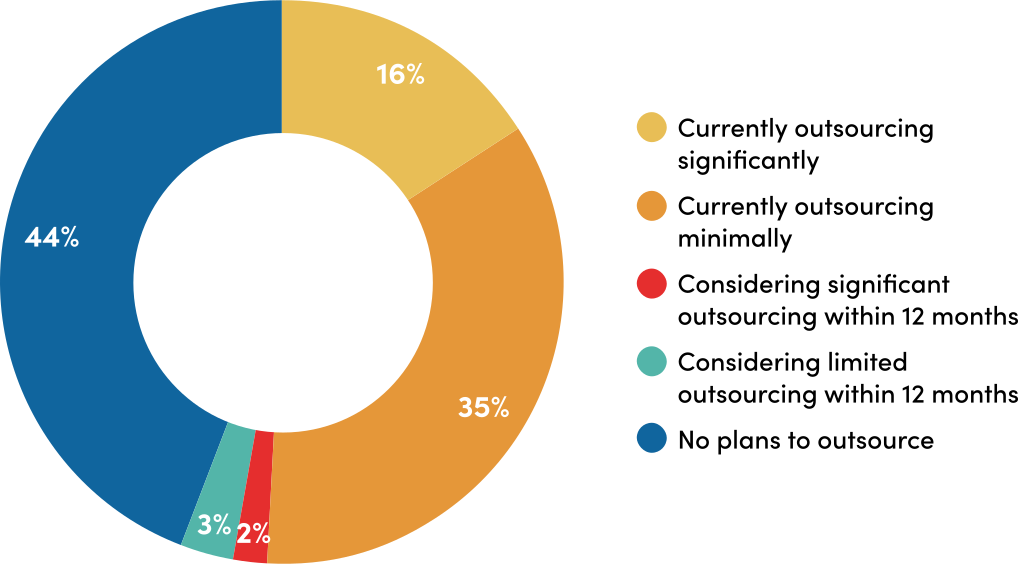
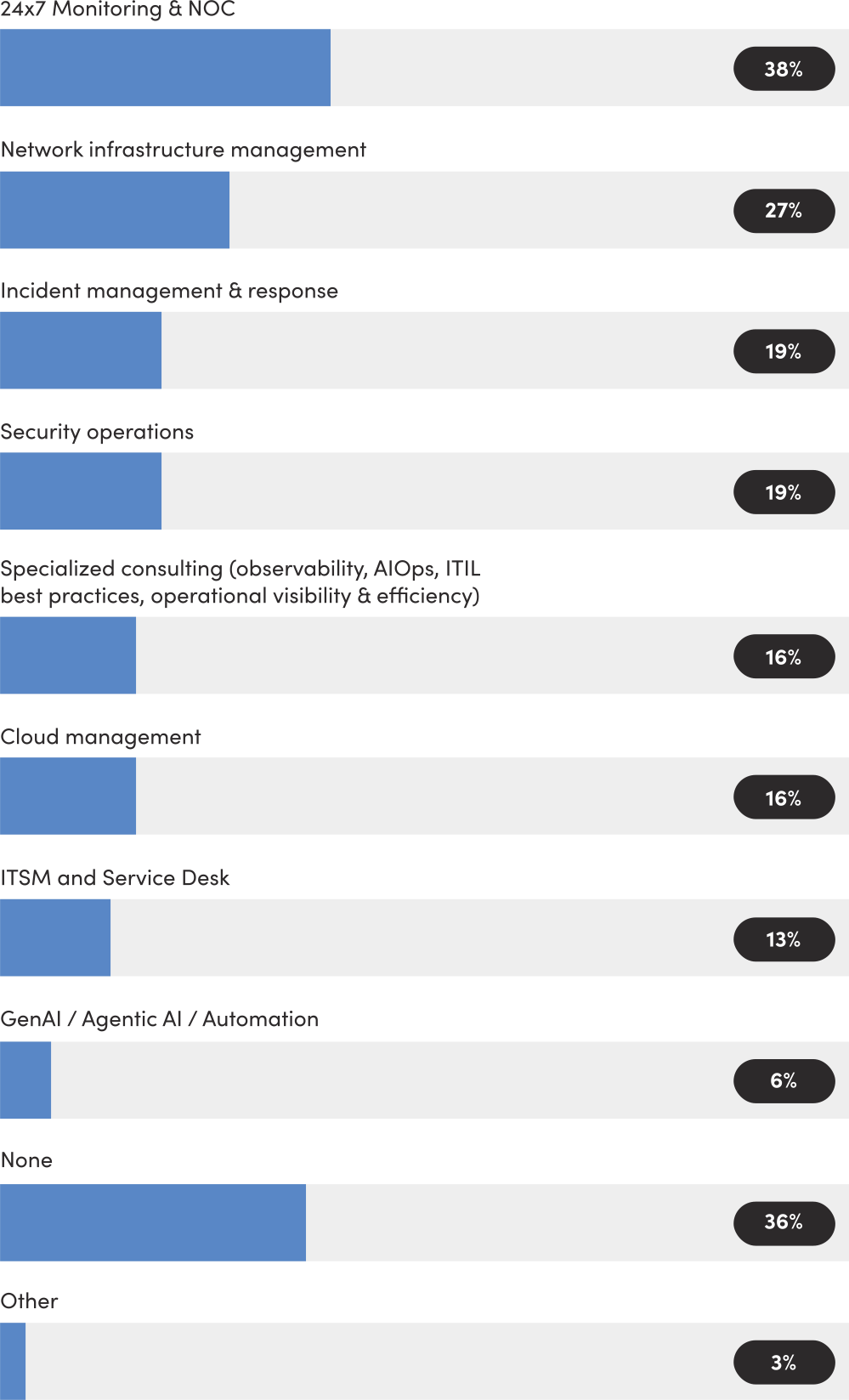
24x7 Monitoring and NOC leads as the top outsourcing target. AI/automation outsourcing is notably low at just 6% despite AI being the #1 future concern.
AI dominates the conversation as a future challenge, yet almost nobody is outsourcing AI capabilities. The timing of this survey (mid-2025) may be a factor, but the responses from our experts suggest something more fundamental is at play.
"I would argue that all of us are outsourcing, pretty much. We're outsourcing basically all AI to the LLM companies. Certainly a few of us are running LLMs directly on our machines, but the vast majority—that's outsourced."
— Jim Martin
VP of Technology, Managed Services, Xerox IT Solutions

"A lot of teams are outsourcing the development of tools and platforms to another company that is doing that via AI. I also think a lot of what we heard from vendors in the space is that they're starting to fall into more of a consultant and contractual role, where they are going and deploying AI solutions on-prem for customers for very specific types of functions, like in the healthcare industry and certain other industries where security is much more of a concern."
— Austin Kelly
VP of Service Delivery, Xerox IT Solutions
"Even large enterprises don't have the ability to focus on this internally. They would rather outsource so they can get to market faster. Everyone's worried about being left behind."
— Prasad Ravi
Former VP of Product Management, Xerox IT Solutions
"I think the smaller startups are going to leverage agentic tools to develop the platforms that solve problems. I don't know what enterprise providers like Salesforce or ServiceNow are going to do in a couple of years, because most people are going to just develop it on their own.
We likely won't need CCIE anymore! The big providers will sell it as a subscription service, saying, 'Hey, here's a whole bunch of data. Build me a network or architect this for me, given my locations, my site, my bandwidth requirements, my security.' That CCIE service will produce something for you. I think it's going to happen much sooner than everybody thinks."
— Prasad Rao
SVP of Managed Services, Xerox IT Solutions
"I have my suspicions! I don't have any evidence to fully support this yet, but I'm really wondering how all of these vibe-coded applications are going to evolve over time. When it breaks, what do you do? If the AI doesn't solve it for you, what do you do? In terms of wanting to keep expanding, adding capabilities over time—is it going to be performant? Is it going to be secure?
There's a very different thing between this cool prototype that you knocked out in three hours and something you're running your business on for the next five years. It may be that the technology moves fast enough to keep up with whatever craziness happens, but we have no data yet to support that."
— Jim Martin
VP of Technology, Managed Services, Xerox IT Solutions
"Domain expertise is very key. You can have an expert who uses Claude Code, but having that married with domain expertise is key."
— Prasad Ravi
Former VP of Product Management, Xerox IT Solutions
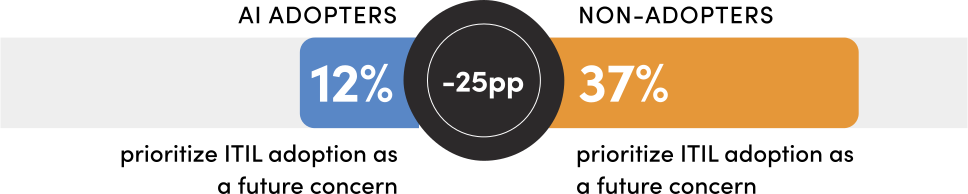
AI adopters are 25 percentage points less likely to prioritize ITIL adoption/best practices as a future concern.
Are AI adopters moving beyond traditional frameworks? Have they already built those foundations and moved on? Or is there a risk that organizations skip foundational frameworks in the rush to adopt AI?
"The AI adopters are usually the tech-oriented people. For them, ITIL is often an afterthought. But I've seen examples where someone built a management platform using AI tools, but clearly understood they still needed strong processes underneath. They adopted AI but understood the importance of process."
— Prasad Rao
SVP of Managed Services, Xerox IT Solutions
"It may simply be that it's not so much that ITIL is no longer valuable. It's that in a pre-AI world, people were always sort of struggling to find what is the best practice, what's the best way to solve these problems. Whereas now they're just asking the AI to solve their problem, and maybe the AI is going to pull something from ITIL. Maybe it's not. But instead of searching for a process or framework that solves the problem for them, they're just going to a tool that tries to solve the problem for them."
— Jim Martin
VP of Technology, Managed Services, Xerox IT Solutions